

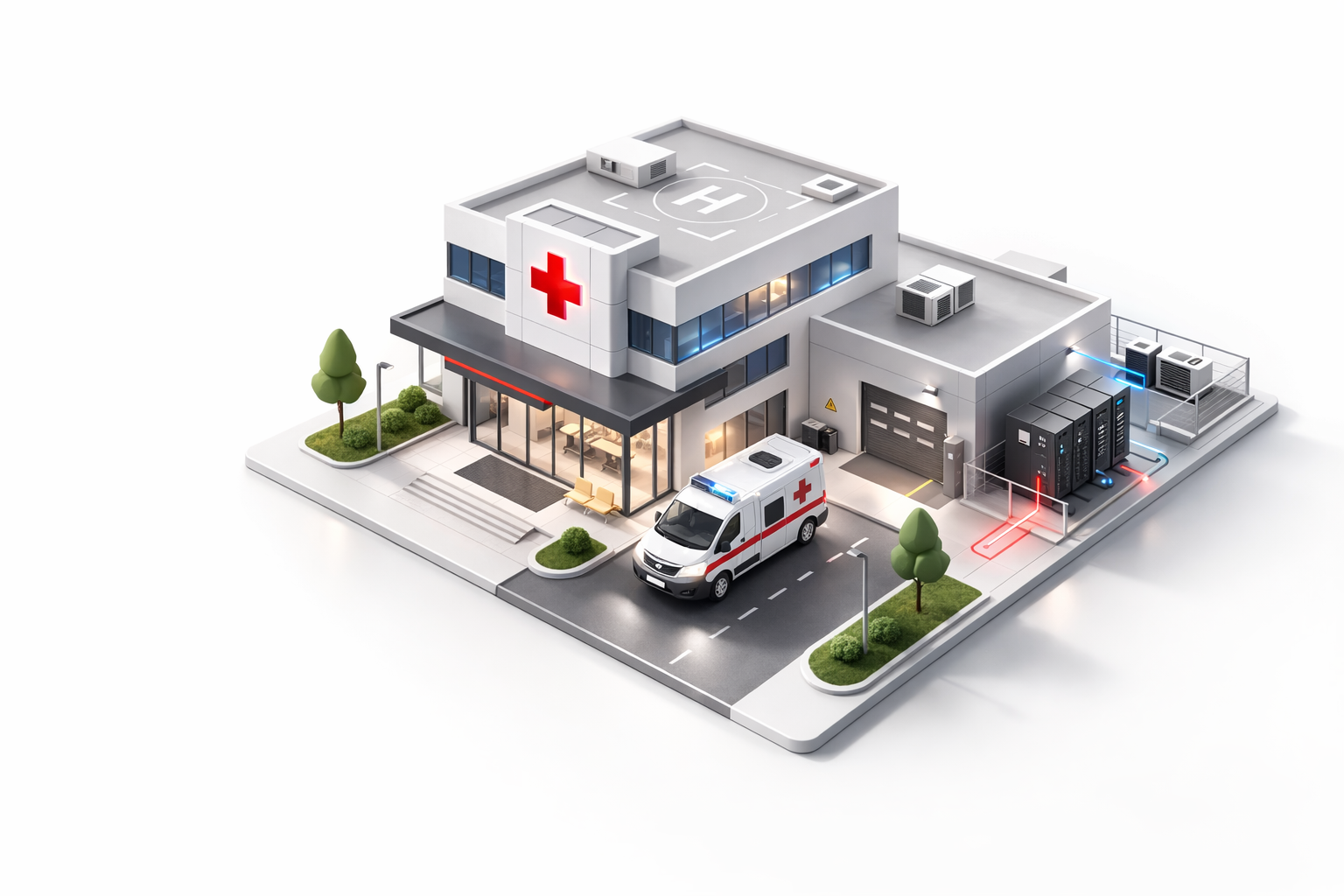
Emergency power systems for hospitals
When it comes to reliable energy supply in the sensitive environment of doctors, practices, laboratories, and hospitals, uncompromising safety is crucial. This is precisely where ALLTRONIC Powersystems is your specialized partner.
Free risk analysisChallenges
We understand the unique demands of the healthcare sector: maximum reliability, standards-compliant systems, protection of critical infrastructure, and absolute business continuity – even in an emergency. Our customized energy and power supply solutions ensure that medical devices, operating theaters, intensive care units, and IT systems are reliably powered at all times.As experts in critical power supply, we develop individual concepts precisely tailored to the needs of hospitals, clinics, and medical facilities. From planning and implementation to long-term maintenance, we offer a comprehensive service – technically precise, standards-compliant, and future-proof.Trust in tested quality, maximum operational safety, and genuine expertise. Secure your medical infrastructure – with ALLTRONIC Powersystems as a strong partner at your side.
Risks
Why Emergency Power in Hospitals & Medical Technology? Typical Risks of Power Outages:
Types of Backup Power Systems
In medicine, multi-stage concepts are often used, which can look as follows:
Stage 1 – UPS
A UPS system with 0 second transfer time supplies, for example:
- Operating room lighting
- Monitoring screens
- IT servers
- Medical technology controls
Bridging time: Up to approx. 15 minutes
Type: Battery-supported online UPS (double conversion)
Stage 2 – Emergency Power System
Supplies, for example, parts of or the entire hospital building
Level 3 – Redundancy
Large clinics and laboratory facilities have:
- 2–3 generators (N+1 redundancy)
- multiple UPS redundancies
- dual grid power supply
- separate transformers
Technical Concepts for the Medical Industry
Switching time
OR & ICU: max. 0–0.5 seconds (via UPS)
Other safety-relevant areas: ≤ 15 seconds
Autonomy period
Recommended:
At least 24 hours
Many homes plan 48-72 hours
3-5 days diesel supply
Load Management
Prioritization:
1. Life support systems (proprietary technology)
2. OR
3. ICU
4. Diagnostics
5. General care
OR & ICU: max. 0–0.5 seconds (via UPS)
Other safety-relevant areas: ≤ 15 seconds
Recommended:
At least 24 hours
Many homes plan 48-72 hours
3-5 days diesel supply
Prioritization:
1. Life support systems (proprietary technology)
2. OR
3. ICU
4. Diagnostics
5. General care